
REDDING: Growing through Lent
-
February 25, 2025
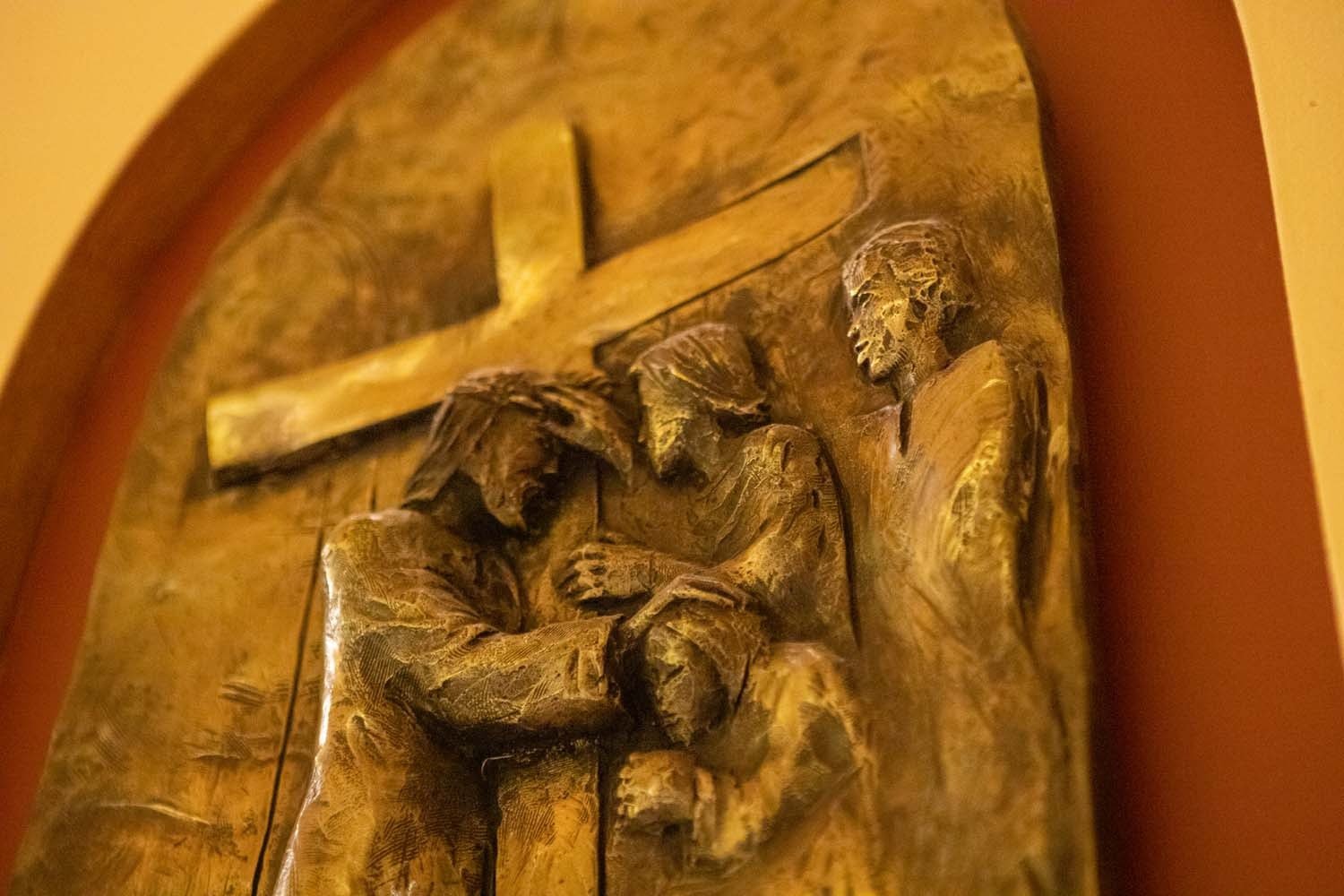
(Photo by James Ramos/Herald)
What are you doing for Lent? Who are you doing it for?
Growing up, my primary association with Lent was having to give something up. We’ve all been there, right? As I grew older, I was introduced to the practice of adding something as well, like adding a particular prayer to my daily routine.
When I was in college, I grew a great deal in my faith and became very active at St. Mary’s Catholic Center at Texas A&M University. My newfound zeal for my faith led to a desire to amp up my Lenten practices. One year, I committed to a strict fast, eating only bread and water, for multiple days of the week. I don’t remember how long I lasted, but it definitely was not for all of Lent. Looking back, I realize that not only was I trying to take on too much, too fast (no pun intended), but I wasn’t really doing it for the right reasons. I felt like I had something to prove and taking on a major Lenten practice was a badge of honor. It was more about me than it was about God.
Our faith is always about growing in our relationship with Jesus Christ, and Lent is an opportunity to do that in a particular way. Throughout Lent, we follow Christ all the way to the cross. We are reminded that He died and rose again for our sake. And so, we ask ourselves, what might I give in return? How might I grow closer to the one who will stop at nothing to draw nearer to me? This is the context in which we should discern, with God, what practices we want to take on for Lent.
Traditionally, Lent is a time of prayer, fasting and almsgiving. Here are different ways that we might think of these practices:
Prayer: How do we communicate with God now, and how might that communication improve, either in quantity or quality? If we don’t make much time for prayer now, this is a great time to try out new practices. What kind of prayer speaks to you? If you already pray regularly, what might enhance that prayer?
Fasting: This might be what we are most familiar with: giving something up. This doesn’t need to be drastic or a form of torture, but it also shouldn’t be arbitrary. This is a chance to look at our attachments. Is there anything that I need to be willing to let go of for the sake of my relationship with God, others and myself? What might help me to be a better person? A better Christian?Almsgiving: Our faith is never just about ourselves and God. Love of God and love of neighbor cannot be separated. Almsgiving is a chance to focus on those in need in our community. This could be a monetary gift to those in need. Perhaps if we save money from fasting from something, the proceeds could be donated to a good cause. We shouldn’t just think of this in terms of money. How can we serve?
How can we draw nearer to Christ in the poor and vulnerable among us by volunteering?
Whatever we choose to do this Lent, let it be focused on growing closer to Christ. It is not about perfection but about progress, not about proving ourselves but about responding to God’s infinite love. In all that we do, let it be for the greater glory of God.
Father Tucker Redding, SJ, serves as chaplain and director of the Catholic Student Center at Rice University.(Photo by James Ramos/Herald)